Louis Comfort Tiffany & The Art of Business
- Belinda S
- Jul 13, 2022
- 5 min read
Updated: Nov 11, 2022
A common perception regarding the scope of economics is one which presumes that business entrepreneurship orbits a prosaic world of statistics, growth and profit. Anything that interferes with or detracts from the profit margin is considered a detrimental factor to be erased from the equation. This reductive ideology is symptomatic of our 21st century environment, in which today's voracious business goliaths do not invest in maintaining the equivalent standards of beauty or durability which were expected during America's Golden Age--the era when exquisite craftsmanship and materials were expected and demanded by companies, consumers and the culture.
In my previous blog, I discussed the splendorous architecture and multidimensional, community-conscious retail concepts developed by entrepreneurs John Wanamaker and the Straus brothers of Macy's. The men I chose and will continue to feature were not motivated by unadulterated avarice, egotism, or the perpetuation of undeserved hagiographies concocted by their public image consultants--all which are so typical of moguls in the present day. Rather, they were pioneers who remodeled civilization by innovation, artistry, technology, and benevolently sharing their windfalls with the world, for the benefit of all humankind.
Join me now as I highlight the brilliantly talented Art Nouveau & Aesthetic Art stained glass artist and businessman Louis Comfort Tiffany, who like the men of his epoch, strove to leave behind a legacy that celebrated beauty in design for the world to enjoy. My brief biography of Louis discusses his journey, presents images of his renderings, and the raison d'etre for creating his glorious art.
Louis Comfort Tiffany

It is my dearest wish to help young artists of our country...and to assist them in establishing themselves in the art world.
Louis Comfort Tiffany

Son of Charles Tiffany (1812-1902), founder of the iconic jewelers Tiffany and Company, Louis Comfort Tiffany (1848-1933) efficiently and appreciatively utilized the advantages his father's prosperity afforded him. Louis may have been born into wealth and prestige, but rather than squandering his fortune on luxuries, leisure and self-indulgence, he devoted his life to the pursuit of artistic excellence, his businesses, serving the art community, and innovative adaptations to the field of glass-making. Determined to use his authentic, creative voice to enhance beauty in the world, Louis began his foray into fine arts as a painter, followed by studio apprenticeships, academic studies, and partnering in his father's jewelry business between 1881-83.
Although attending military academies, Louis ardently concentrated on perfecting his natural artistic abilities. He began as a fine art painter who was tutored by George Inness, then shifted gears by studying chemistry and glass-making. Louis enrolled at the National Academy of Design in New York; apprenticed at the studio of Leon-Adolphe-Auguste Belly; and traveled around the world to exotic locations.1 Cognizant that his unique journey was unattainable for most people, Louis vowed to assist artists far less fortunate than himself--a motto he would subsequently bring to fruition.
In the meantime, he briefly organized Louis Comfort Tiffany and Associated Artists. Albeit encountering some very high-profile interior design commissions and permanently impacting design aesthetics, Louis disbanded the group to venture into the business of glass-making. Never satisfied with the status quo, the enterprising visionary founded his own company, Tiffany Glass Company in 1885 (later renamed Tiffany Studios), and consequentially, revolutionized glass art.2

Louis' imagination and adoration of colorful luminescence not only invigorated an artistic discipline that had stagnated since the Middle Ages, his oeuvre extended well beyond traditional glass mediums to include mosaics, jewelry, pottery, lamps, and more. Ahead of his time, Louis invented and patented opalescent window glass called favrile, which involved "a radical new treatment whereby several colors were combined and manipulated to create an unprecedented range of hues and [iridescent] three-dimensional effects"--an aesthetic rejected at that time by advocates of the Gothic tradition.3 Despite that temporary setback, by the turn of the 20th century and the apex of Art Nouveau, Louis Tiffany's favrile technique combining vivid colors and iridescence was popularly incorporated into his renowned Tiffany windows, mosaics, glassworks, lamps, murals, jewelry, enamelware and more. During this epic period, Tiffany Studios employed more than 300 artisans.

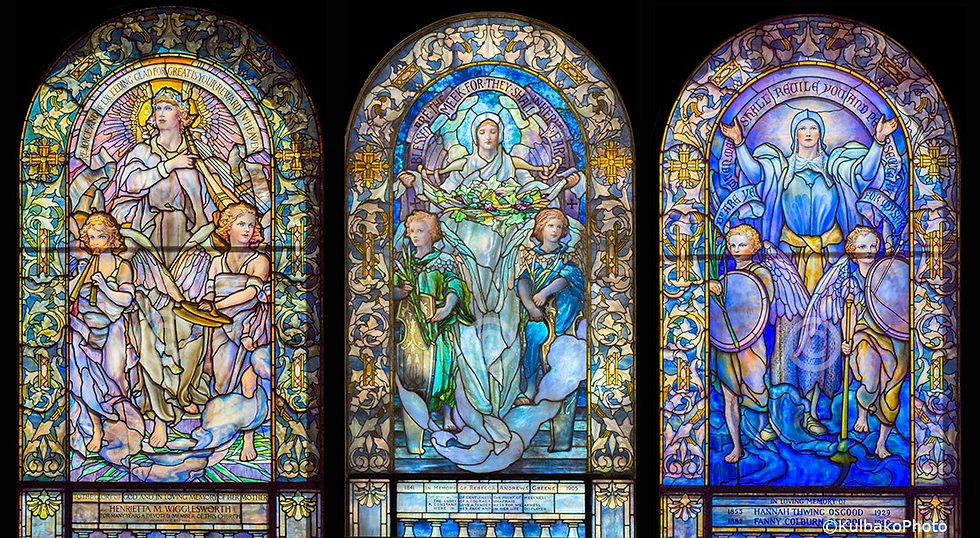


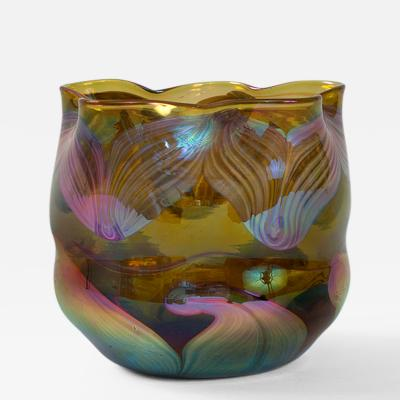

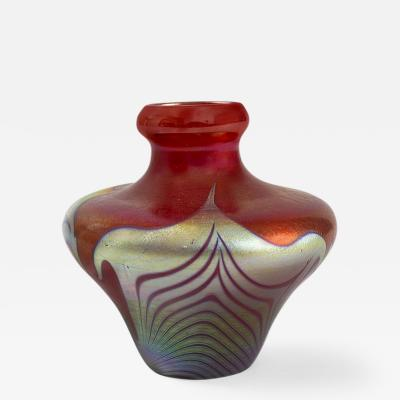
Tiffany Studios, Glass Vases


A prolific man until his passing, Louis and Tiffany Studio's meteoric rise ended bittersweetly, with the company's bankruptcy in 1932. The societal transformation from Art Nouveau to Art Deco was a factor, greatly worsened by the timing of the Great Depression. For predictably, as economic catastrophes ensue, those hardest hit are the manufacturers of expensive luxury and artisanal items. Tiffany Studios--the company that produced exquisite stained glass art and glass products, and who managed to survive a decline during the rise of Art Deco--declared bankruptcy in 1932. Louis died the following year.4

The end of Tiffany Studios was an unfortunate finale, raising the question as to why such a noteworthy company could not be rescued. In my concise final analysis, the company met its demise as Art Nouveau faded from popularity, but the main reason for their closure is that this occurred during the Great Depression (1929-1932), rendering contingency-recovery plans impossible. One could argue that perhaps a rush to produce very expensive glassworks and products in the style of Art Deco may have saved the business, and that Tiffany Studios' managerial staff failed to do so. Or that a merger with another similar company, allowing for the pooling of talents and resources, could have seen them through the crisis.
Those arguments fail to recognize that fate and uncontrollable circumstances play powerful roles in shaping every human endeavor; and that fashionable styles and economic trends fluctuate beyond the ability of particularly vulnerable businesses to adapt quickly enough to save themselves. Certainly, keeping up with rapidly alternating or vanishing trends would be quite implausible during the Great Depression--and a time consuming, costly task that a specialized enterprise like Tiffany Studios could not endure. Furthermore, after more than 50 highly creative, productive years, Louis Tiffany already retired in 1919 and started his charity, the Louis Comfort Tiffany Foundation, which trained young artists--a mission he fulfilled.5 Considering the economic realities at hand, there was no one else who had the energy, funds or strong will necessary to restore the company in his stead.
Yet at the present moment and into the future, Tiffany's creations remain and will always be famously celebrated, lovingly preserved, coveted at auctions, and displayed in historic centers and museums around the world. The stunning craftsmanship and artistry of Tiffany pieces cannot be outmatched in beauty and timelessness, as demonstrated by Louis' collaborative, mural masterpiece with artist Maxfield Frederick Parrish. Titled The Dream Garden (1914-1915), the mural is located inside the lobby of the Curtis Building in Philadelphia, on 7th and Walnut Streets.6 Made from 100,000 pieces of hand blown glass, the 15 feet by 49 feet mural was the largest in the United States until 2021.7
Although I have included three images below, having seen The Dream Garden in person, I must add that the photos do not do the mural justice and that no photo can. Louis Comfort Tiffany and his studio may no longer be with us, but their legacy always will.


CITATIONS: 1. The Art Story, "Louis Comfort Tiffany: American Painter and Decorative Artist," https://www.theartstory.org/artist/tiffany-louis-comfort/. 2. Ibid. 3. The Charles Hosmer Morse Museum of American Art, "Louis Comfort Tiffany," https://morsemuseum.org/louis-comfort-tiffany/. 4. Ibid. 5. Paul Doros, "A Chronology of Louis C. Tiffany and Tiffany Studios," 2021, https://www.tiffanystudios.org/tiffany-chronology.html. 6. Association for Public Art, The Dream Garden by Maxwell Parrish and Louis C. Tiffany, 1914-1915, https://www.associationforpublicart.org/artwork/the-dream-garden/. 7. Atlas Obscura, "Tiffany Glass Mural The Dream Garden," https://www.atlasobscura.com/places/tiffany-glass-mural-the-dream-garden. BIBLIOGRAPHY: Atlas Obscura. "Tiffany Glass Mural The Dream Garden." https://www.atlasobscura.com/places/tiffany-glass-mural-the-dream-garden. The Art Story. "Louis Comfort Tiffany: American Painter and Decorative Artist." https://www.theartstory.org/artist/tiffany-louis-comfort/. Association for Public Art. The Dream Garden by Maxwell Parrish and Louis C. Tiffany, 1914-1915. https://www.associationforpublicart.org/artwork/the-dream-garden/. The Charles Hosmer Morse Museum of American Art. "Louis Comfort Tiffany." https://morsemuseum.org/louis-comfort-tiffany/.
Doros, Paul. "A Chronology of Louis C. Tiffany and Tiffany Studios." 2021. https://www.tiffanystudios.org/tiffany-chronology.html.
Feld, Stuart P. " 'Nature in Her Most Seductive Aspects': Louis Comfort Tiffany's Favrile Glass." The Metropolitan Museum of Art Bulletin New Series 21, No. 3 (Nov., 1962): 101-112. Accessed July 13, 2022. https://doi.org/10.2307/3257894.
Open Stax College. "The Stock Market Crash of 1929." http://pressbooks-dev.oer.hawaii.edu/ushistory/chapter/the-stock-market-crash-of-1929/.
Tannler, Albert M. "Architectural Glass in Pittsburgh: Tiffany Windows in Western Pennsylvania." https://www.tiffanystudios.org/tiffany-chronology.html.
Van Giffen, Astrid. "Conservation of a Louis Comfort Tiffany Stained Glass Window." Corning Museum of Glass https://blog.cmog.org/2014/05/28/conservation-of-a-louis-comfort-tiffany-stained-glass-window/.

Comments